Back into the pages of Leaves (1855) recently and once again I’m taken by the space
Whitman attempts to carve out. He
asserts a priority of the “demonstrable” over the “mythical”, claiming that
“mark[s]” are made “out of any times!”
Could be today. Could be in a garage, basement, or “upper
room”. Could be over a diner [sic]
table. Could be through the slog of
devoted work -- or the luck of happenstance when x variables coincide at a
given time and place.
Could be just about anywhere, anytime, or not,
but often when people head in the direction of narrative or myth, compelling as
it is, they can miss the material and spatial.
There is a literalism or minimalist documentary orientation that can
slip from mere archiving into a sublime.
That’s part of what Whitman’s up to as he makes
lists of observations of life in America.
The empirical slides into the liturgical, not of yesteryear but of What’s
Happening Now. As he puts it, it’s not “as
if…what has transpired…in North and South America were less than the small
theater of the antique or the aimless sleepwalking of the middle ages!”
When Whitman talks about “America” or
“Americans”, he’s talking about a new way of being human that isn’t limited to
a particular geography, ethnicity, or government (though it may be in or from
the Americas that it emanates) – because he talks about a certain way people
tend to be here:
“Their deathless attachment to freedom…their
self-esteem and wonderful sympathy…the air they have of persons who never knew
how it felt to stand in the presence of superiors” – where the President takes
his hat off to the people and “not they to him”…and “these…are unrhymed
poetry”.
Wittingly or not he’s making a
case for what makes America not only rooted in the Enlightenment and
Romanticism but also in ways of life that existed on these continents prior to
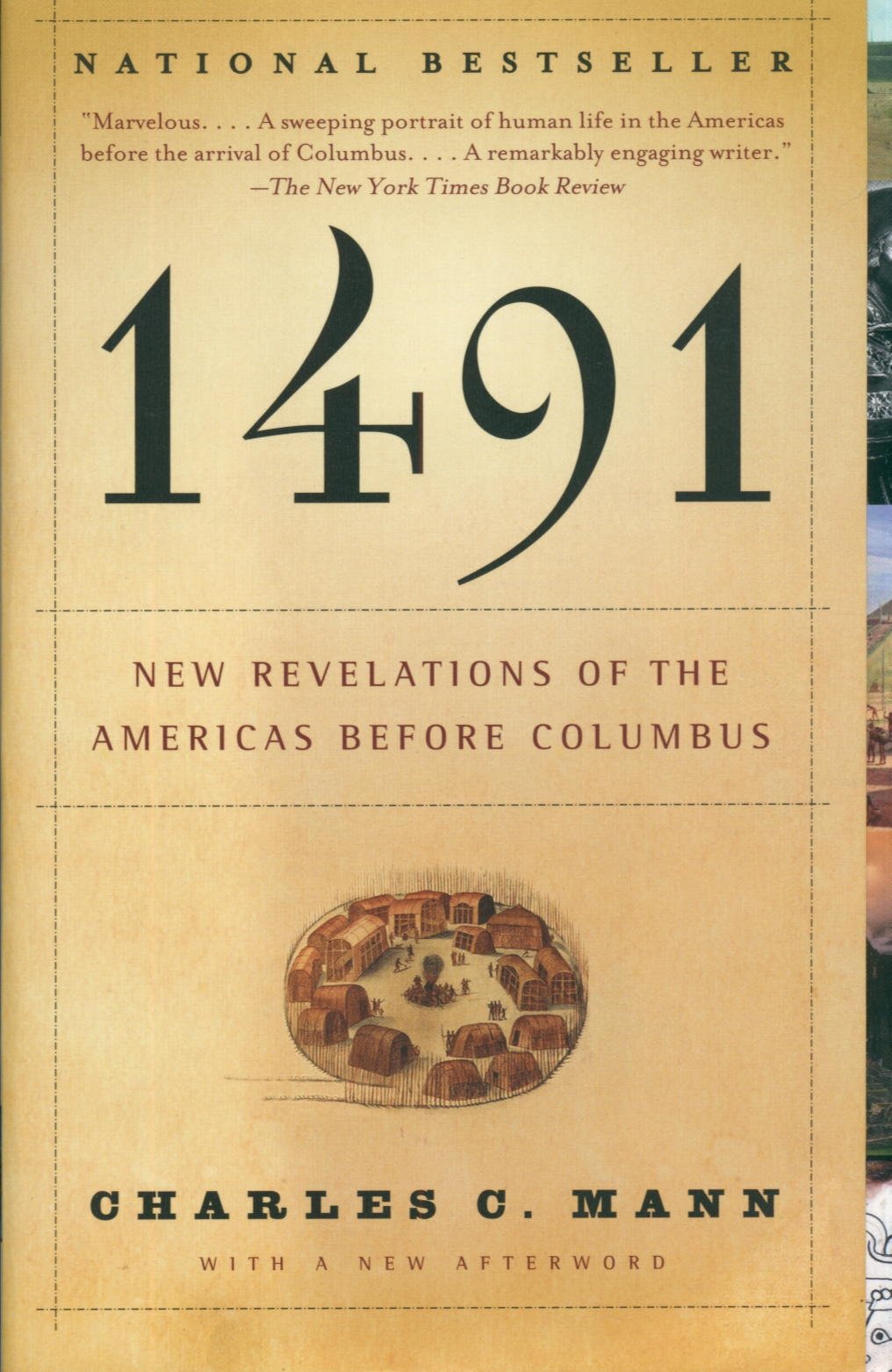
Columbus (see Charles Mann’s 1491).
I think of an ecstatic energy, Whitman’s “roughs”,
the “nonchalance”, and “the tremendous audacity” that still somehow works hand
in hand with “wonderful sympathy”. It’s
like Iggy Pop meets Carl Rogers’ “unconditional positive regard”.
Now after what people call America has been
in full force culturally for many years, it can start to sound like a blast
from the 19th century past when he exclaims that we need not constantly
turn “east” for our inspiration: “As if
it were necessary to trot back generation after generation to the eastern
records!”
Though now if you go east from Europe toward the
Americas, you end up at the Pacific Rim and back around again to Africa and the Fertile
Crescent. Then again as
people from all around the world come and go, new marks are made.
-bbc