Showing posts with label Whitman. Show all posts

Wednesday, May 13, 2015

New Marks Are Made

Back into the pages of Leaves (1855) recently and once again I’m taken by the space Whitman attempts to carve out.  He asserts a priority of the “demonstrable” over the “mythical”, claiming that “mark[s]” are made “out of any times!” 

Could be today.  Could be in a garage, basement, or “upper room”.  Could be over a diner [sic] table.  Could be through the slog of devoted work -- or the luck of happenstance when x variables coincide at a given time and place.

Could be just about anywhere, anytime, or not, but often when people head in the direction of narrative or myth, compelling as it is, they can miss the material and spatial.  There is a literalism or minimalist documentary orientation that can slip from mere archiving into a sublime.

That’s part of what Whitman’s up to as he makes lists of observations of life in America.  The empirical slides into the liturgical, not of yesteryear but of What’s Happening Now.  As he puts it, it’s not “as if…what has transpired…in North and South America were less than the small theater of the antique or the aimless sleepwalking of the middle ages!”

When Whitman talks about “America” or “Americans”, he’s talking about a new way of being human that isn’t limited to a particular geography, ethnicity, or government (though it may be in or from the Americas that it emanates) – because he talks about a certain way people tend to be here:

“Their deathless attachment to freedom…their self-esteem and wonderful sympathy…the air they have of persons who never knew how it felt to stand in the presence of superiors” – where the President takes his hat off to the people and “not they to him”…and “these…are unrhymed poetry”.

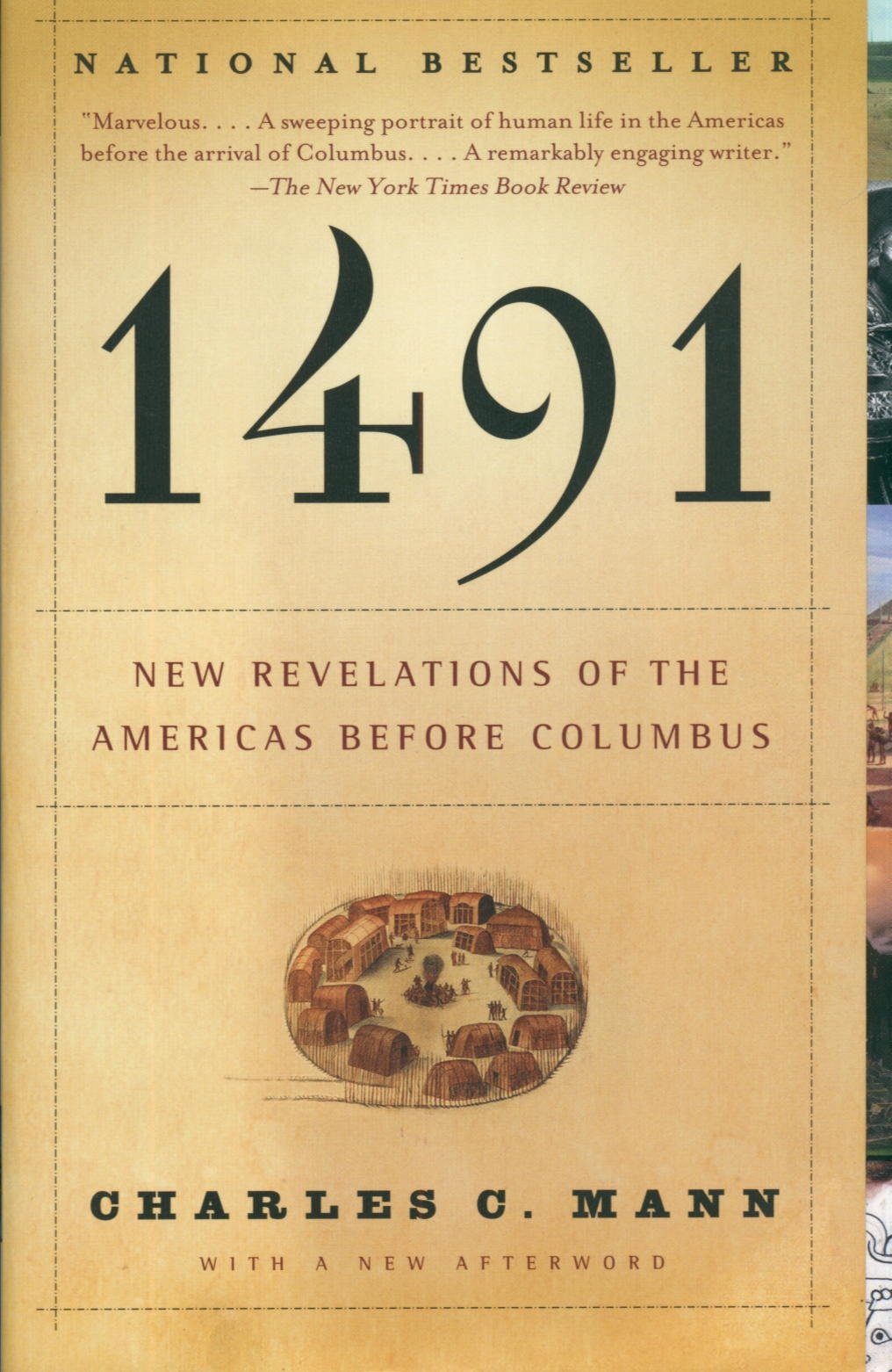
Wittingly or not he’s making a case for what makes America not only rooted in the Enlightenment and Romanticism but also in ways of life that existed on these continents prior to Columbus (see Charles Mann’s 1491). 

I think of an ecstatic energy, Whitman’s “roughs”, the “nonchalance”, and “the tremendous audacity” that still somehow works hand in hand with “wonderful sympathy”.  It’s like Iggy Pop meets Carl Rogers’ “unconditional positive regard”. 

Now after what people call America has been in full force culturally for many years, it can start to sound like a blast from the 19th century past when he exclaims that we need not constantly turn “east” for our inspiration:  “As if it were necessary to trot back generation after generation to the eastern records!” 

Though now if you go east from Europe toward the Americas, you end up at the Pacific Rim and back around again to Africa and the Fertile Crescent.  Then again as people from all around the world come and go, new marks are made.


-bbc


Wednesday, October 23, 2013

Self, Variations


Whitman’s expansive self recalls for me what people tell me about atman and Brahman in Hinduism and confirm him as a mystic, in a certain sense.  His “mysticism” is based in “empirical” description but a phenomenon under his description isn’t “just there.”  It’s there as we’ve seen it and experienced it and felt it.  It’s there as it’s run through our brains and been spit out as particular words.  Letting words do their work is simultaneously letting our brains do their work – that’s the entire brain system / body, from head to toe and back again.

I need Whitman’s expansive empirical mysticism, or something like it, from time to time, perhaps often.  However, there can be a disconnect, a bit of the pie in the sky, and this is where I relate sometimes more with some portions of Ashbery, where we have the expanded sense of self but now drastically more finite.  I’ll never get over the first words of his I read years back, the opening of his Self-Portrait in a Convex Mirror (1975), opening poem,

            I tried each thing, only some were immortal and free.
            Elsewhere we are sitting in a place where sunlight
            Filters down, a little at a time,
            Waiting for someone to come.  Harsh words are spoken….

            (From J.A., “As One Put Drunk into the Packet-Boat”)

We might start with the air of Icarus before he gets too far, before the emergency, and before a potentially fatal fall and end up sitting right where we are, waiting, in the sun, filtering to a little spot there within eye-shot of a maple, in a squabble.

-bbc


Wednesday, September 25, 2013

What Works?


I keep thinking about what works.  Always depends, of course, but there are some reliables: past reading + experience along with gentle questioning of how it feels, to begin with.  Recently I keep coming back to #132 in Complete Poems of E.D. (T.H. Johnson / Back Bay edition):  “I bring an unaccustomed wine / To lips long parching / Next to mine, / And summon them to drink; / Crackling with fever, they Essay….”  I find this trustworthy, affectively speaking.  And by the time we get to the last bit here my neurons are firing up, too.   

So as I’m reading, I’m implicitly asking Does this feel right? but also Does this contain or expand my intellectual universe?  Am I opened up and strengthened?  Or am I shut down and made even less significant than I already am?  When I get to Whitman’s assertions, I certainly feel the expanse:  “I am of old and young, of the foolish as much as the wise, / Regardless of others, ever regardful of others, / Maternal as well as paternal, a child as well as a man…” (Leaves [1855] in Whitman: Poetry & Prose, Library of America).  

I have to admit that I get a little suspicious and cautious about Whitman’s optimism and romanticism at times.  Feels like we could be set up for a fall, perhaps unnecessary fall.  Still, often the risk seems worth it.  “A learner with the simplest, a teacher of the thoughtfulest, / A novice beginning experient of myriad of seasons, / Of every hue and trade and rank, of every caste and religion, / Not merely of the New World but of Africa Europe or Asia . . . . a wandering savage, / A farmer, mechanic, or artist . . . . a gentleman, sailor, lover or quaker, / A prisoner, fancy-man, rowdy, lawyer, physician or priest. / I resist anything better than my own diversity, / And breathe the air and leave plenty after me….”  

-bbc


Front Cover


Front Cover


Sunday, August 11, 2013

"Strange Little Machines"


In conversation, Glen Armstrong sometimes refers to this or that poem as a “strange little machine” and, among others, I think of Dickinson.  Some poets protest against the idea of their efforts being algorithms at work but it needn’t be an insult to attribute creativity to machinations.  With the right sort of machine and program running, one’ll have practically infinite variability in outcome.  “Nature” in: odd, lovely, machination out.

That’s how Dickinson works.  One could almost call it an “empirical” activity.  Nature, plus an awareness of “the” literature, in: riffs and variations from there.  I think of Whitman in this context, too, where the riffs become waves and the variations attempt to set us off into new territory.  Nature and literature get run through their minds and we end up with some fortunate inventions.

And by invention here I like to go back to what’s summed up in the old rhetorical word “inventio”, which people tell me can be translated from the Latin to English as either “invention” or “discovery”.  The ambiguity is an advantage here because it points to something that’s neither fabricated out of nothing nor completely given.  Rather, the result of inventio is partially constructed, not unlike they way we’ve found out memory works.  Our brains too are strange little machines.  -bbc