Showing posts with label poetry. Show all posts

Wednesday, May 13, 2015

New Marks Are Made

Back into the pages of Leaves (1855) recently and once again I’m taken by the space Whitman attempts to carve out.  He asserts a priority of the “demonstrable” over the “mythical”, claiming that “mark[s]” are made “out of any times!” 

Could be today.  Could be in a garage, basement, or “upper room”.  Could be over a diner [sic] table.  Could be through the slog of devoted work -- or the luck of happenstance when x variables coincide at a given time and place.

Could be just about anywhere, anytime, or not, but often when people head in the direction of narrative or myth, compelling as it is, they can miss the material and spatial.  There is a literalism or minimalist documentary orientation that can slip from mere archiving into a sublime.

That’s part of what Whitman’s up to as he makes lists of observations of life in America.  The empirical slides into the liturgical, not of yesteryear but of What’s Happening Now.  As he puts it, it’s not “as if…what has transpired…in North and South America were less than the small theater of the antique or the aimless sleepwalking of the middle ages!”

When Whitman talks about “America” or “Americans”, he’s talking about a new way of being human that isn’t limited to a particular geography, ethnicity, or government (though it may be in or from the Americas that it emanates) – because he talks about a certain way people tend to be here:

“Their deathless attachment to freedom…their self-esteem and wonderful sympathy…the air they have of persons who never knew how it felt to stand in the presence of superiors” – where the President takes his hat off to the people and “not they to him”…and “these…are unrhymed poetry”.

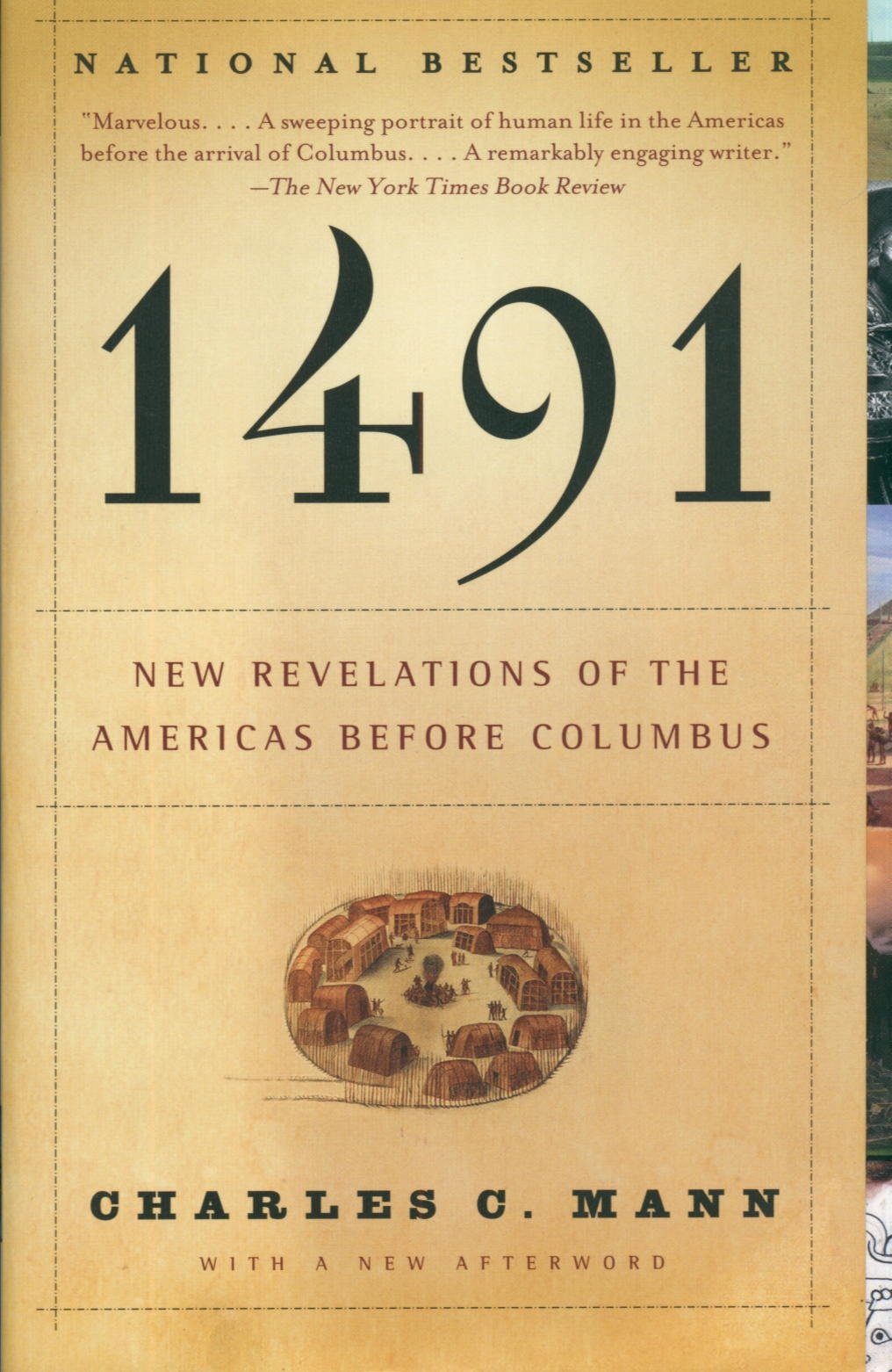
Wittingly or not he’s making a case for what makes America not only rooted in the Enlightenment and Romanticism but also in ways of life that existed on these continents prior to Columbus (see Charles Mann’s 1491). 

I think of an ecstatic energy, Whitman’s “roughs”, the “nonchalance”, and “the tremendous audacity” that still somehow works hand in hand with “wonderful sympathy”.  It’s like Iggy Pop meets Carl Rogers’ “unconditional positive regard”. 

Now after what people call America has been in full force culturally for many years, it can start to sound like a blast from the 19th century past when he exclaims that we need not constantly turn “east” for our inspiration:  “As if it were necessary to trot back generation after generation to the eastern records!” 

Though now if you go east from Europe toward the Americas, you end up at the Pacific Rim and back around again to Africa and the Fertile Crescent.  Then again as people from all around the world come and go, new marks are made.


-bbc


Monday, July 14, 2014

“Mr. & Mrs. Duck Dinner”


I’ve been reading Russell Edson’s “Mr. & Mrs. Duck Dinner” and realizing just what a hit American arts and letters took when we lost Edson this April. The prose poem challenges the ordinary as it commits to a novel scenario:

An old woman with a duck under her arm is let into a house and asked, whom shall I say is calling?
Mr. and Mrs. Duck Dinner.

It’s not allegory, exactly. It’s not dark humor, exactly. But it is, as it is nowhere else in literature, an interspecies couple who hire themselves out as a duck dinner. “My husband will need plucking; I can undress myself” announces Mrs. D. “We’ll have the kitchen girl defeather your husband,” offers the butler. The absurd? The farcical? I taught this poem recently, and we all agreed that it’s a scene a certain British comedy troupe would have made short work of. The Python crew, however, would have missed the pathos, quickly cutting to Terry Jones nude at the piano as soon as the weirdness started to loop back upon itself.

Edson doesn’t take the easy way out here. In spite of – perhaps because of – the absurdity, we get the wiriness, the hurt. I suspect it’s the civility with which the woman carries out her unusual task that breaks my heart in the end. She carries out her duties within the erudition that comes from too many servants, too much culture, too many careful ways of saying things. There are those who can hire out just about anything, and the rest of us who endure our lot. There are intimacies that need to be addressed and worked out. When the whole business of defeathering and “rather pretty” kitchen help gets addressed, our heroine reminds us that we’re not fooling around. We’re all “professional duck dinners.”


                                                                                                   – G. F. A.


Wednesday, May 28, 2014

“This Year I Mean to Be an Elephant”


I have several favorites from Wendy Xu’s collection You Are Not Dead, one of them being “This Year I Mean to Be an Elephant.”  I am taken by the direct talk.  “I don’t know if you understand me when / I say hopefully there is a future and we / are both allowed in it.”  We’re chatting, damn seriously, over what could be a kitchen bar, about what’s been and what’s to be.  Or over the telephone, long distance.

                 …I mean last year it 

      was OK just to be flattened by our ideas. 
      I sat in so many rooms and eventually felt
      interesting and not like a chair.


She worries, expects, thinks, forgets, one by one what’s rushing to mind now.  But these commonplace mental activities take on precise emotional resonance when we find out what she’s worrying about, expecting, etcetera.  “I worry that when I turn on / the radio this morning it sounds just like / I expect.”

Throughout I get simultaneously the sense of deadpan, of being bowled over, and of taking off to someplace unexpected.  “Last year I forgot really / embarrassing secrets like how I am allergic / to regular soap.”  After a catalogue of telling me where she’s at, she sets the mood for “this year”, the year she is “to be an elephant”:

              …Cue all the different kinds
      of light and what music makes you feel
      not dead. Last night I dreamt about sand.


-bbc


Monday, April 28, 2014

"Spackler's Lament"


I’ve been reading “Spackler’s Lament” from Karen Skolfield’s PEN recognized collection, Frost in the Low Areas and wondering just how inventory becomes litany. Getting from list to poem takes magic. It’s not enough to walk about noticing the landmarks and goings-on “All over the city.” Lesser poets have tried, I suspect with copies of Lunch Poems in tow and well annotated with stars and exclamation points, and they’ve noticed sufficient detail. Skolfield, however, deftly notices only those details that share poetry’s center, those that can somehow be  simultaneously here and not here: “rounded edges where hard corners should reign,” “the emptiness formed by a squirrel’s tail / touching its back,” “the space between bars at zoos and jails.” Each detail is replaced by another, which is kind of the point. Each new fascination dances with its own absence. Languages, “Spanish or Catalan,” are both here and there, beautiful but transitional. In the end, for all of our skill with words and native knowledge, we cradle only the shell, “the speckled idea of the bird.”

                             - GFA


Purchase Karen Skolfield's Book:

Friday, March 7, 2014

“The Cabinet of Simplicity”


“The Cabinet of Simplicity”

Awhile back, Glen Armstrong pointed me in the direction of Weldon Kees and Kenneth Fearing, two essentials that never made it into my literary education.  There’s an uncanny familiarity about them, especially reading back to them through the New York School and others.  A favorite for me of Fearing’s selected poems is “The Cabinet of Simplicity”, which begins as a kind of manifesto, the kind of manifesto that might actually be acceptable.


    It will be known as Doctor Barky’s cabinet, a new magic
        Something for which there can be no substitute.
        May be used as an ornament or worn like a hat.
        Neat.  Genteel.
        Doctor Barky’s patented magic cabinet of strict, strict
             simplicity.

If others might hold the whole universe in the palms of their hands, Doc Barky, rather, shoves it all into his drawers, these special drawers as a part of this special cabinet.

What is this cabinet?  Could be his “order of things”.  But whatever it is it’s more magical than scientific.  Yet whimsy gives way to “discords struck from violent streets” and “death” and then, more convincing, to a dark dreamland where “he cut off his head and gave it to / a girl with stone lips”, her body “burned from within.” Later he’s “dining on her lips.”  Somehow there appears to be a connection between cannibalizing stone lips by way of a decapitated head and Barky’s need: “a need to arrange the / world so that he can understand it, / And still more, to create a fixed world.”  I start off liking Barky from the start with his magic cabinet and supposed naiveté, but by this point I become horrified by what might happen as he imposes this “fixed world” if it extends much beyond this cabinet.


But then each drawer of the cabinet is designated by Barky for this and that, and his order of things seems tame again.  “The doctor has finished.  /  He steps back into the shadows forever.”  So Fearing asserts, really as a set up, because candles continue to burn around “the magic box” and “the mechanical heart draws into itself / The veins and arteries of chaos” or perceived chaos in Barky’s universe.  Fearing has been amping us up for a final kicker:

    Comrade, this is no poem,
      Who touches this
      Touches Doctor Barky’s patented magic cabinet of
           certified, strictly guaranteed simplicity and
           truth.


-bbc


Monday, January 13, 2014

"How the Pope Is Chosen"


I’ve been reading “How the Pope Is Chosen” by James Tate, a poem in which one of my clear-headed creative writing students perceived “metaphors.” Hmm . . . Certain aspects of the poem certainly drop shadows we would expect cast from other shapes. Pope selection is orchestrated in terms of poodle selection:

If a Pope’s hair is allowed to grow unchecked,
it becomes extremely long and twists
into long strands that look like ropes [. . .]

Popes are very intelligent.
There are three different sizes.

The poodle, the juvenile delinquent and the rugged western hero can all stand in for the Pope as director Tate checks the lighting and tapes off marks on the stage.

For me, however, the poem stands in for and calls our attention to a certain kind of language at once nostalgic, because we’ve grown up with it, and ridiculous, because we’ve grown beyond it. We are lulled to some other psychological state by rhetoric so reassuring that Highlights Magazine should take note:

growing up to become a Pope is a lot of fun.
All the time their bodies are becoming bigger and stranger,
but sometimes things make them unhappy.

And the poem, for all of its finely honed humorous barbs, grows bigger and stranger and more tonally complex. The same lips that slurp bowls of cream attract black flies. This is no vendetta against Catholicism or The American Kennel Club, even if their shared pomp is brought into question. The poem is ultimately about the joy and futility of making meaning.

[G.F.A.]